
Solar panels do not need perfect direct sunlight to work. They need daylight. Direct sunlight gives panels their strongest production, but solar panels can still generate electricity on cloudy days, in hazy weather, and in some partial shade.
That is good news for homeowners in West Virginia and across Appalachia. Our region has sunny days, cloudy stretches, wooded hillsides, rainy seasons, winter weather, and plenty of homes surrounded by trees. A home does not need desert-level sunshine to be a good solar candidate.
The real question is not whether your roof gets direct sun every minute of the day. The better question is whether your roof gets enough usable sunlight across the year for a well-designed solar system to make sense.
Solar Panels Need Light, Not Perfect Sun
Solar panels use photovoltaic cells to convert light into electricity. They do not need heat to create power. In fact, very hot weather can sometimes reduce panel efficiency, while bright, cooler days can be excellent for solar production.
Direct sunlight is still the best condition for solar. When the sun is clear and hitting your panels directly, your system can produce more electricity. When clouds, shade, rain, or snow reduce the amount of light reaching the panels, production drops.
That does not mean the system stops working every time the sky is not bright blue. Solar panels are designed to use available daylight, including indirect light that passes through clouds or reflects from nearby surfaces.
Direct Sunlight Vs Indirect Sunlight
Homeowners often picture solar panels only working when the sun is blazing overhead. The truth is more flexible. Panels can use both direct sunlight and indirect sunlight, but the amount of power they produce changes based on the strength of the light.
Understanding the difference helps set realistic expectations before going solar.
What Direct Sunlight Means
Direct sunlight means the sun’s rays hit the panels clearly, with little to no obstruction from clouds, trees, buildings, or roof features. This is when panels usually produce the most electricity.
A south-facing roof with strong direct sunlight through the middle of the day is often a strong solar candidate. East-facing and west-facing roof sections can also work, depending on the home, energy usage, and system design.
What Indirect Sunlight Means
Indirect sunlight is light that reaches the panels after being scattered by clouds, haze, mist, or the atmosphere. It can also include reflected light from nearby surfaces.
Panels can still use indirect sunlight, but production is lower than it would be in clear direct sun. A bright overcast day will usually produce more solar energy than a dark stormy afternoon, because more usable light is reaching the panels.
Do Solar Panels Work On Cloudy Days?
Solar panels do work on cloudy days. They just produce less electricity than they would on clear, sunny days. The amount of production depends on how thick the clouds are and how much daylight still reaches the panels.
Light cloud cover may only reduce production somewhat. Heavy clouds, storms, or dark winter skies can reduce production much more. In some cases, cloudy-day production may fall to a small fraction of the system’s peak output.
This is why solar systems are designed around annual production, not one perfect day. A good solar design looks at the expected sunlight across the year, including seasonal weather patterns, not just the sunniest week of summer.
For Appalachian homes, that yearly view matters. West Virginia, Virginia, Kentucky, and Ohio all have cloudy days, but they also have enough daylight across the year for many homes to benefit from solar when the property is a good fit.
Do Solar Panels Work In Shade?
Solar panels can work in some shade, but shade is more serious than ordinary cloud cover. Clouds reduce sunlight across the whole sky. Shade can block specific panels or roof sections, which can reduce system output in a more uneven way.
A little shade in the early morning or late evening may not be a major problem. Heavy shade through the strongest sun hours of the day can make solar less effective.
Common Sources Of Shade
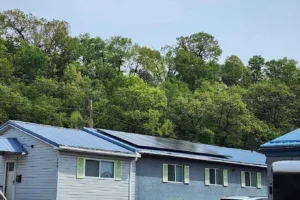
Shade can come from many places around a home. Trees are the most common source, especially in Appalachian neighborhoods where mature tree cover is part of the landscape.
Shade can also come from chimneys, dormers, nearby buildings, roof peaks, utility poles, hillsides, and ridgelines. Seasonal changes matter too. A roof that gets strong summer sun may experience more shade in winter when the sun sits lower in the sky.
Why Partial Shade Matters
Partial shade can reduce production because one shaded section of the system may not perform like the rest. The impact depends on the system design, equipment, and how much of the array is affected.
For example, a tree branch shading one corner of the roof for one hour is very different from a large tree covering the whole array during peak sunlight. One may be manageable. The other may require trimming, a different panel layout, or a different solar design.
How Modern Solar Design Helps
Modern solar technology can help reduce the impact of partial shade. Microinverters and similar equipment allow panels to operate more independently, which can limit losses when one panel is affected by shade.
Good design is still the most important step. A professional shade review can identify the best roof sections, avoid problem areas, and estimate realistic production before the system is installed.
Do Solar Panels Work When It Rains?
Solar panels can still produce electricity when it rains, as long as daylight reaches the panels. Production is usually lower because rainy weather often comes with heavy cloud cover.
Rain can also have a small benefit. It can help wash away dust, pollen, and light debris from the panels. In rural and tree-heavy areas, that natural cleaning can support better performance after long dry stretches.
Rain itself does not power the system. The panels are still using light. If the rain comes with a bright sky, production may continue at a reduced level. If the rain comes with dark storm clouds, output may drop much more.
Do Solar Panels Work In Snow And Cold Weather?
Cold weather does not stop solar panels from working. Solar panels use light, not heat, so a cold sunny day can still be productive.
Snow is different. If snow fully covers the panels, it can block sunlight and reduce or temporarily stop production. Once the snow slides off, melts, or clears, the panels can begin producing again when daylight reaches them.
Many roof-mounted systems are installed at an angle, which can help snow move off the panels more easily. System production still tends to vary by season because winter days are shorter and the sun sits lower in the sky.
Do Solar Panels Work At Night?
Solar panels do not produce electricity at night because there is no sunlight to convert. This does not mean a solar home goes dark after sunset.
Most residential solar systems are grid-tied. During the day, the system produces electricity for the home. When the home needs more power than the panels are producing, it can pull electricity from the grid.
Net metering and battery storage can also affect how nighttime usage is handled. Net metering may allow extra daytime production to be credited through the utility, depending on local rules. A battery can store solar energy for later use, including after dark or during some outages.
How Much Sunlight Do Solar Panels Need?
Solar systems are designed using a concept called peak sun hours. A peak sun hour is not simply one hour of daylight. It is a way to measure strong usable solar energy.
A home may have many daylight hours in a day, but only some of those hours deliver strong solar intensity. A solar design looks at how much usable sunlight the roof receives across the year.
This is why online guesses can be misleading. Two homes in the same town may have different results because one roof may face south with little shade, while another may sit under trees or face a less productive direction.
The right solar design should account for roof direction, roof angle, tree cover, utility usage, system size, and expected annual production.
Is Solar Worth It In Places That Are Not Sunny All The Time?
Solar is not only for desert states or homes with nonstop sunshine. Many states with mixed weather still have strong solar adoption because solar value depends on annual sunlight, utility rates, system design, and household electricity use.
For Appalachian homeowners, the key is not perfect weather. The key is a realistic assessment of the roof and energy bill. A home with good sun exposure and steady electricity usage may still be a strong solar candidate, even with cloudy days and seasonal changes.
Solar can also give families more control over energy costs. Instead of relying only on a utility bill that can change over time, homeowners may be able to produce a portion of their own power right from the roof.
That is part of Solar Holler’s bigger mission. Appalachians have powered America for generations, and solar gives local families another way to keep producing energy at home.
What Solar Holler Looks At Before Designing Your System
Solar Holler does not design systems based on guesswork. A real solar recommendation should be based on the home, the roof, the electric bill, the utility company, and the homeowner’s goals.
This matters even more in Appalachia, where hills, trees, weather, and roof shapes can vary from one property to the next.
Roof Direction And Available Space
Roof direction affects how much sunlight panels receive. South-facing roof sections are often strong, but east-facing and west-facing roofs can still work well in many cases.
Available roof space matters too. A simple open roof may allow for a cleaner design, while a roof with vents, chimneys, dormers, or multiple sections may require a more careful layout.
Trees, Hills, And Seasonal Shade
Appalachian homes often deal with shade from trees, ridgelines, and changing sun angles. A roof may perform differently in summer than it does in winter.
Solar Holler reviews shade and production expectations before recommending a system. This helps homeowners understand what their roof can realistically produce.
Utility Usage And System Size
A solar system should be designed around the home’s actual electricity usage. A family with electric heating, EV charging, or high summer cooling needs may require a larger system than a smaller household with lower usage.
The utility company also matters. Rates, billing rules, interconnection steps, and net metering policies can affect the final savings picture.
Equipment And Long-Term Support
The right equipment can help improve reliability and production. Panels, inverters, monitoring tools, and system layout all play a role in long-term performance.
Solar Holler also supports customers after installation. Monitoring and service help homeowners understand how their system is performing over time.
How To Get More Power From Solar Panels Without Perfect Sun
You cannot control the weather, but smart solar design can help make better use of the sunlight your roof does receive.
A few practical steps can make a difference:
- Place panels on roof sections with the strongest annual sunlight
- Trim trees when it is safe, reasonable, and appropriate
- Avoid roof areas with heavy daily shade
- Use equipment that helps manage partial shade
- Review system production through monitoring
- Consider battery storage if backup power is important
The goal is not to chase perfect conditions. The goal is to design a system that works well for your home, your roof, and your energy needs.
Common Myths About Solar Panels And Sunlight
Solar is often misunderstood, especially in regions where people are used to cloudy weather, wooded properties, and winter seasons.
Clearing up these myths can help homeowners make better decisions.
Myth: Solar Panels Only Work In Direct Sunlight
Solar panels work best in direct sunlight, but they can still produce electricity from indirect daylight. Production will be lower, but the system does not shut down just because the sky is cloudy.
This is why solar can work in many parts of the country, not only the sunniest regions.
Myth: Solar Panels Do Not Work On Cloudy Days
Solar panels do work on cloudy days. Output depends on cloud thickness, time of day, season, and the amount of light reaching the panels.
A cloudy day usually means reduced production, not zero production.
Myth: Solar Panels Need Heat
Solar panels need light, not heat. Hot weather is not what makes panels produce electricity.
A cool sunny day can be excellent for solar because the panels receive strong light without extreme heat.
Myth: Shade Means Solar Is Impossible
Shade can reduce production, but it does not always mean solar is impossible. The amount, timing, and location of the shade all matter.
A professional solar assessment can show whether shade can be managed with design, equipment, or panel placement.
FAQs About Solar Panels And Direct Sunlight
Do Solar Panels Need Direct Sunlight To Work?
No. Solar panels need daylight, not perfect direct sunlight. They produce the most electricity in direct sun, but they can still generate power from indirect and diffuse light.
The amount of electricity they produce depends on how strong the available light is.
Do Solar Panels Work On Cloudy Days?
Yes. Solar panels work on cloudy days, but production is lower than it would be on clear sunny days.
Light clouds may have a smaller impact, while thick storm clouds can reduce production much more.
Do Solar Panels Work In The Shade?
Solar panels can work in some shade, but shade lowers production. Heavy shade during peak sun hours can make solar less effective.
Partial shade may be manageable with smart design, careful panel placement, and modern equipment.
Do Solar Panels Work In Rain?
Yes. Solar panels can produce electricity during rain if daylight is still reaching the panels.
Rainy weather usually reduces output because of cloud cover, but rain can also help clean dust and pollen from the panels.
Do Solar Panels Work In Snow?
Solar panels can work in cold weather and light winter conditions. Heavy snow that covers the panels can block sunlight and reduce or stop production until it clears.
Once the panels are exposed to daylight again, they can resume producing electricity.
Do Solar Panels Work At Night?
No. Solar panels do not produce electricity at night because there is no sunlight.
A grid-tied system can still use utility power after dark, and battery storage can provide stored solar energy when included in the system design.
How Much Sun Does My Roof Need For Solar?
Your roof needs enough usable annual sunlight to make the system worthwhile. The answer depends on roof direction, shade, energy usage, utility rates, and system size.
A solar assessment can show whether your home gets enough sunlight for solar to make sense.
Are Solar Panels Worth It In West Virginia?
Solar can be worth it for many West Virginia homeowners, especially homes with good sun exposure, steady electricity use, and a system designed around the actual property.
The best way to know is to review your roof, electric bill, and utility details through a free solar assessment.
Find Out If Your Home Gets Enough Sun For Solar
You do not need a perfect, cloudless roof to go solar. You need a smart design, an honest shade review, and a clear look at your electric usage.
Solar Holler helps Appalachian homeowners understand whether solar makes sense for their roof, their utility bill, and their long-term energy goals.
Request your free solar assessment today and see whether your home gets enough sun for solar.