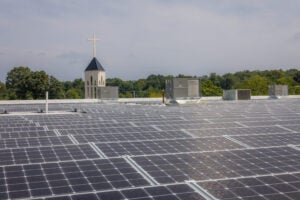

Most homes need about 15–25 solar panels to cover a large share of their electricity use, but there is no one-size-fits-all answer. The right number depends on how much power your home uses, how much sunlight your roof gets, the wattage of the panels, and how much of your utility bill you want to offset.
For many Appalachian homes, the answer can vary even more. A house tucked into the hills with tree shade may need a different design than a sunny roof in town. A home with electric heat, a workshop, or an EV charger may need more panels than a similar-sized home with lower usage.
That is why Solar Holler starts with your real electric bill, your real roof, and your real energy goals. Online averages can help you understand the basics, but a custom solar assessment is the best way to know how many panels your home actually needs.
Most Homes Need 15–25 Solar Panels
For a typical home, 15–25 panels is a common starting range. Smaller homes with lower electric usage may need fewer panels, while larger homes or homes with high monthly bills may need more.
The number can also change depending on panel wattage. Higher-output panels can produce more electricity per panel, which may reduce the total number needed. Lower-output panels may require more roof space to produce the same amount of power.
Solar Holler often sees home solar systems fall in the 20–40 panel range, depending on the household’s electric bill, roof space, sun exposure, and goals. That does not mean every home needs that many panels. It simply shows why local design matters.
How To Calculate How Many Solar Panels You Need
The basic formula is simple: look at how much electricity your home uses in a year, then compare that to how much electricity each solar panel can produce in your area.
A simple version looks like this:
Annual Electricity Usage ÷ Expected Annual Production Per Panel = Estimated Number Of Panels
If your home uses more electricity, you will likely need more panels. If your roof gets strong sunlight and your panels produce efficiently, you may need fewer panels to reach the same goal.
This is why your electric bill is so important. It shows your actual kilowatt-hour usage, not just a rough guess based on square footage or the number of bedrooms in your home.
Start With Your Electric Bill, Not Your Square Footage
Many homeowners ask how many panels they need for a 1,500 or 2,000 square foot house. Square footage can give a rough clue, but it is not the best way to size a solar system.
Two homes with the same square footage can use very different amounts of electricity. One may have efficient appliances and gas heat. Another may have electric heat, a hot tub, a garage workshop, or multiple people working from home.
Your monthly and annual electric usage is a better starting point. A smaller all-electric home may need more panels than a larger home with lower electricity demand. Solar sizing should follow your energy use, not just your floor plan.
What Affects The Number Of Solar Panels Your Home Needs?
The right panel count depends on several factors working together. Your electric usage matters, but so does your roof, sunlight, equipment, utility rules, and long-term energy plan.
A good solar design should look at the whole picture before recommending a system size.
Your Monthly And Annual Electricity Usage
Your electric usage is the biggest factor. A home using 600 kWh per month will usually need fewer panels than a home using 1,500 kWh per month.
In most cases, you do not need to collect a full year of electric bills. One recent utility statement is usually enough because it includes your 12-month usage history.
That annual usage history helps show whether your home has higher electricity demand during certain seasons, such as summer cooling, winter heating, or holiday usage.
Solar Panel Wattage
Solar panels come in different wattages. A higher-wattage panel can produce more electricity than a lower-wattage panel under the same conditions.
That means two systems with the same number of panels may not produce the same amount of power. Panel quality, wattage, inverter technology, and roof layout all affect the final output.
Your Roof Space And Shape
Your roof needs enough usable space for the number of panels your home requires. Chimneys, vents, dormers, skylights, and roof angles can all reduce the space available for solar.
A simple, open roof may be easier to design around. A roof with several small sections may still work, but it may require a more careful layout.
Shade From Trees, Hills, And Nearby Buildings
In Appalachia, shade matters. Trees, ridgelines, neighboring buildings, and the way the sun moves across your property can all affect production.
Some shade does not automatically rule out solar, but it does need to be considered. A custom design can help place panels where they will produce the most power.
Your Location And Sun Exposure
Solar works across West Virginia, Virginia, Kentucky, and Ohio, but sunlight is not exactly the same from one property to another. Roof direction, pitch, and local weather patterns can all affect annual production.
A sunny roof with strong southern or western exposure may produce more electricity than a shaded roof facing a less productive direction.
Your Utility Company And Net Metering Rules
Your utility company can affect how much solar makes sense for your home. Billing rules, net metering policies, and connection fees all influence the value of your system.
The solar systems we install stay connected to the grid. The goal is to reduce how much electricity you buy from the utility, not to do away with the grid completely.
Your Solar Goals
Some homeowners want to offset as much of their bill as possible. Others want a smaller system that lowers monthly costs while staying within a certain budget.
You may also be planning for future energy needs, such as EV charging, a heat pump, or battery backup. Those goals can change the number of panels your home should have.
How Many Solar Panels Do You Need By Monthly Electric Usage?
Your monthly electric usage gives one of the clearest planning estimates. The more electricity your home uses, the more panels you may need to produce a meaningful offset.
Here is a general guide:
| Monthly Electric Usage | Estimated Solar Panel Range |
| 600 kWh/month | 10–16 panels |
| 800 kWh/month | 14–20 panels |
| 1,000 kWh/month | 17–25 panels |
| 1,200 kWh/month | 21–30 panels |
| 1,500 kWh/month | 26–38 panels |
| 2,000 kWh/month | 34–50+ panels |
These ranges are only planning estimates. The final number depends on your roof, sunlight, panel wattage, utility rules, and how much of your bill you want to offset.
Solar Panel Estimates Based On Monthly Electric Bills
Your monthly electric bill is often one of the clearest starting points for estimating how many solar panels your home may need. While every roof and utility setup is different, your bill gives a helpful snapshot of how much electricity your home uses.
Solar Holler’s home solar systems often fall in the 20–40 panel range, depending on household usage, roof space, sun exposure, and energy goals.
As a general planning guide, homes with higher electric bills usually need larger solar systems, while homes with lower usage may need fewer panels. Solar Holler can use your recent utility bill and roof details to estimate the right system size for your home instead of relying on a generic panel count.
These are not guaranteed numbers or final system designs. They are helpful examples that show why the right panel count should be based on your actual electric bill, roof conditions, and expected solar production.
How Many Solar Panels Do You Need By Home Size?
Home size can help you start the conversation, but it should not be the final sizing method. A larger house does not always use more electricity, and a smaller house is not always more efficient.
Still, many homeowners search by square footage, so these ranges can be useful as a rough guide:
| Home Size | Rough Solar Panel Range |
| 1,000 Sq Ft | 8–16 panels |
| 1,500 Sq Ft | 12–22 panels |
| 2,000 Sq Ft | 16–28 panels |
| 2,500 Sq Ft | 20–34 panels |
| 3,000 Sq Ft | 24–40+ panels |
If your home uses electric heat, has high cooling needs, or includes extra energy loads, your panel count may be higher than the range suggests.
Can Solar Panels Power A Whole House?
Yes, solar panels can power a whole house when the system is designed around the home’s annual electricity usage and production potential. The key is proper sizing.
That does not always mean the home is off-grid. The residential solar systems we install are grid-tied. That means the home uses solar power when the panels are producing and stays connected to the utility when more power is needed.
During sunny hours, your panels may produce enough electricity to power your home and send extra energy back to the grid. At night or during lower-production periods, your home can still draw from the utility.
Do You Need A Battery To Power A House With Solar?
Not always. A battery is optional for grid-tied solar systems. Your panels can still lower your utility dependence without battery backup.
Battery storage becomes more important if you want backup power during outages or more control over when your solar energy is used. It can also be helpful for homes in rural areas where grid interruptions are more common.
Solar Holler can help you decide whether battery backup makes sense for your home. For some families, the best first step is a strong solar system. For others, solar plus storage may better match their goals.
What If Your Roof Cannot Fit Enough Panels?
Sometimes a roof cannot fit enough panels to offset the full electric bill. That does not always mean solar is off the table.
A smaller system may still reduce your monthly utility costs. In some cases, higher-output panels, a different layout, tree trimming, or a ground-mounted system may help improve production.
Energy efficiency upgrades can also make a difference. If your home uses less power, your solar system may not need to be as large to create meaningful savings.
Why A Custom Solar Assessment Matters
Online calculators and averages are useful, but they cannot see your roof. They do not know your shade, your utility bill, your goals, or how your home actually uses power.
A custom solar assessment gives you a more realistic answer. Solar Holler can review your roof, utility usage, sun exposure, and payment options to estimate the right system size.
This matters because solar should be designed for your home, not for a national average. The right system should fit your roof, your budget, and the way your family uses energy.
Why Homeowners Choose Solar Holler
Solar Holler is a full-service solar developer and installer serving West Virginia, Virginia, Kentucky, and Ohio. We are rooted in Appalachia and focused on making solar practical, affordable, and accessible for local families.
Solar Holler helps with system design, financing guidance, installation, monitoring, and long-term support. Our team understands Appalachian homes, local utility rules, tree shade, hillside properties, and the real questions homeowners ask before going solar.
For Solar Holler, solar is not just about panels. It is about helping neighbors take control of energy costs, keep more power local, and continue Appalachia’s long history of powering America.
FAQs About How Many Solar Panels You Need
How Many Solar Panels Do I Need To Power A House?
Most homes need about 15–25 solar panels to cover a large share of their electricity usage. The exact number depends on your electric bill, panel wattage, roof space, sun exposure, and energy goals.
Solar Holler often sees home systems in the 20–40 panel range, but every home should be reviewed individually.
How Do I Calculate How Many Solar Panels I Need?
The simplest way to estimate how many solar panels your home may need is to start with your electric bill. In most cases, Solar Holler can review one recent utility statement because each statement typically includes 12 months of usage history.
That usage history gives a clearer picture than guessing from a monthly average. From there, a solar assessment can account for your roof direction, shade, utility requirements, available space, panel wattage, and expected solar production at your home.
This gives you a more practical estimate than trying to calculate panel production on your own, since every home and roof is different.
How Many Solar Panels Do I Need For A 2,000 Sq Ft House?
A 2,000 square foot home may need roughly 16–28 panels, but square footage is only a rough guide.
Your electric usage matters more. Two homes of the same size can need very different solar systems depending on appliances, heating, cooling, and household habits.
How Many Solar Panels Do I Need For 1,000 kWh Per Month?
A home using 1,000 kWh per month may need roughly 17–25 panels, depending on panel wattage, sunlight, and roof conditions.
If your home has heavy shade or higher energy goals, your system may need to be larger.
Can Solar Panels Power My Whole House?
Yes, solar panels can power a whole house when the system is properly sized for your annual electricity usage.
Grid tied solar homes remain connected to the grid for nighttime power, cloudy days, and any usage beyond solar production.
Do I Need A Battery With My Solar Panels?
No. A grid-tied solar system can work without a battery.
Battery backup is useful if you want stored energy during outages or more control over how and when your solar power is used.
What If My Roof Is Shaded?
Shade can reduce solar production, but it does not always rule out solar. A solar design can focus on the best roof sections and use equipment that supports stronger panel-level performance.
Solar Holler can review your roof and show whether solar makes sense for your property.
Find Out How Many Solar Panels Your Home Needs
Every home is different. Your roof, electric bill, utility company, sun exposure, and energy goals all shape the right solar design.
Solar Holler can help you move from rough estimates to a real answer based on your actual property. Request your free solar assessment today and find out how many solar panels your home may need.