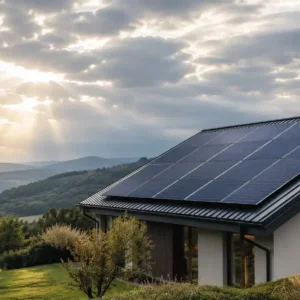

Solar panels work with your electric bill by reducing the amount of electricity your home needs to buy from the utility. During the day, your panels produce power from sunlight. Your home uses that solar electricity first before pulling extra power from the grid.
When your panels produce more electricity than your home needs at that moment, the extra power can flow back to the grid. Net metering rules require the utility to credit you for the extra energy your solar panels send to the grid.
Solar does not usually make the utility disappear completely, but it can help you buy less power from it. For many Appalachian homeowners, that means more control, more predictable energy costs, and less dependence on a bill that can keep rising over time.
Solar Reduces What You Buy From The Utility
Before solar, nearly all the electricity your home uses comes from the utility company. Every light, appliance, air conditioner, heat pump, water heater, and device adds to the amount of energy you buy from the grid.
After solar, your home has another source of power. Your panels make electricity right on your roof, and your home uses that electricity as it is produced. The more solar energy your home uses directly, the less electricity it has to buy from the utility.
If your panels are not making enough power, your home automatically pulls what it needs from the grid. If your panels make more than your home needs, the extra can move back to the grid through a bi-directional meter.
What Your Electric Bill Looks Like Before Solar
Before going solar, your electric bill is usually based on how many kilowatt-hours, or kWh, your home used during the billing cycle. A kilowatt-hour is simply a way to measure electricity usage over time.
Your bill may also include delivery charges, taxes, fees, and fixed monthly customer charges. Those charges vary by utility, but the main cost for most families is tied to the amount of electricity used from the grid.
This is why your bill can change from season to season. In summer, air conditioning may drive usage higher. In winter, electric heat, shorter days, and more time indoors can raise energy use too.
What Changes On Your Electric Bill After Solar?
After solar panels are installed, your bill starts to tell a different story. Instead of only showing how much electricity you bought from the utility, it may also show how much solar energy your system sent back to the grid.
You may see lower grid usage because your home used solar power during the day. You may also see credits if your panels produced extra electricity and your utility credited that energy through net metering.
However, most homeowners still receive some kind of utility bill. That does not mean the solar system is not working. It usually means your home is still connected to the grid and may still owe fixed charges, taxes, fees, or charges for energy used beyond what the solar system produced.
What Is Net Metering?
Net metering is the billing process that helps solar work with the utility grid. It tracks the difference between the power your home pulls from the grid and the extra power your solar system sends back.
When your panels make more electricity than your home is using, that extra power can flow out to the grid. Your utility tracks that exported energy and applies credits according to the rules in your service area.
Later, when your panels are producing less, your home can pull electricity from the grid. This often happens at night, during storms, on cloudy days, or during winter months when solar production may be lower.
Net metering rules can vary by utility and state. That is why Solar Holler reviews your actual electric bill, utility company, and service area before designing your system.
Why You May Still Get A Utility Bill With Solar
One of the biggest surprises for new solar homeowners is that the utility bill does not always disappear. Solar can lower your bill, but most grid-tied homes still stay connected to the utility.
That connection is useful. It allows your home to pull power when solar production is low and send extra power back when production is high. The grid acts as a backup source of electricity for normal day-to-day use.
You may still get a bill because your utility charges fixed monthly fees. You may also owe money if your home used more electricity than the system produced during that billing cycle.
This can happen in winter, when days are shorter and panels have fewer sunlight hours. It can also happen if your household usage changes after the system is designed, such as adding an electric vehicle charger, hot tub, new appliance, or more air conditioning.
What Happens When Your Panels Produce More Than You Use?
On sunny days, especially in spring and summer, your panels may produce more power than your home needs at that moment. When that happens, the extra electricity does not just disappear.
In a grid-tied solar system, the extra power can flow back to the utility grid. A bi-directional meter tracks that flow, measuring power that comes in from the grid and power that goes out from your solar system.
Through net metering, that exported solar energy appears as credits on your bill.
This is one reason solar is often designed around annual energy use, not just one sunny afternoon. A good system design considers how much power your home uses across the year.
What Happens At Night Or On Cloudy Days?
Solar panels need sunlight to produce electricity. At night, they do not make power. On cloudy days, rainy days, or snowy winter days, they may still produce electricity, but usually less than they would in full sun.
When solar production drops, your home automatically pulls electricity from the grid. You do not have to flip a switch or change anything. Grid-tied solar is designed to move smoothly between solar power and utility power.
This is normal. It does not mean your panels are broken or that your system failed. It simply means your home is using the grid when your panels are not producing enough electricity.
If you have battery backup, stored solar energy may also help power certain parts of your home after the sun goes down or during an outage, depending on the system design.
Does Solar Eliminate Your Electric Bill?
Solar can greatly reduce the amount of electricity you buy from the utility, but it does not always eliminate your entire electric bill. Some months may be very low. Some may show credits. Others may still include a balance.
The reason is simple: your bill includes more than just energy usage. Many utilities charge fixed fees for staying connected to the grid. You may also owe for electricity used at night, during low-production months, or during times when your household used more power than expected.
A well-designed solar proposal should show your expected production, estimated energy offset, and likely bill impact. It should also explain what charges may remain after solar.
At Solar Holler, we believe homeowners deserve clear numbers before making a decision. Solar should be explained in plain language, not hidden behind confusing utility terms.
How Solar Can Turn Your Bill Into A Bill Swap
We all pay for power. The question is whether all of that money keeps going to the utility, or whether some of it can be redirected toward producing power at home.
That is the idea behind a solar bill swap. Instead of only paying a utility bill that can rise over time, many homeowners use solar financing or a solar lease to create a more predictable monthly energy path.
The goal is not to pretend electricity is free. The goal is to give families more control over how they pay for power and where that energy comes from.
For West Virginia homeowners, that message matters. Appalachians have powered America for generations. Solar gives local families another way to keep producing energy right here at home.
How Your Utility Company Affects Your Solar Bill
Your utility company plays a major role in how solar appears on your electric bill. West Virginia homeowners may be served by Appalachian Power, Mon Power, Potomac Edison, or a local electric cooperative.
Each utility can have different billing rules, net metering processes, interconnection steps, fees, and credit structures. That is why two homeowners with similar solar systems may still see different bill layouts.
The same idea applies across Solar Holler’s broader service area in Virginia, Kentucky, and Ohio. Solar is local. Your state, your utility, your roof, and your usage all matter.
This is why Solar Holler starts with your actual bill. It gives us the information needed to estimate your system size and cost, expected production, and how solar may affect your monthly utility charges.
How Battery Backup Changes The Picture
You do not need a battery for solar panels to lower your electric bill. Many grid-tied solar systems work without batteries by using solar during the day and the grid when more power is needed.
A battery changes the picture by storing extra solar electricity for later use. That stored power may help during outages or allow your home to use more of its own solar energy after the sun goes down.
Batteries can be valuable, but they also add cost. For some homeowners, the main goal is lowering the monthly electric bill. For others, backup power and energy security are just as important.
The right choice depends on your home, budget, outage concerns, and long-term goals. Solar Holler can help you decide whether battery backup makes sense or whether standard grid-tied solar is the better fit.
How To Read Your Bill After Going Solar
After solar, your electric bill may look different than it did before. The most important numbers to review are your grid usage, solar export credits, fixed charges, and any remaining balance.
You may also notice seasonal changes. Solar production is often higher in sunny months and lower in winter. Your household energy use may also rise and fall depending on weather, travel, guests, appliances, and heating or cooling needs.
It is also helpful to compare your utility bill with your solar monitoring. Your monitoring dashboard can show how much energy your system produced, while your utility bill shows how much electricity moved between your home and the grid.
Together, those numbers give a clearer picture of how solar is performing and how much utility power your home still uses.
How Solar Holler Helps You Understand The Numbers
Solar should feel understandable before you sign anything. That is why Solar Holler reviews your electric bill, roof, utility company, energy usage, and payment options before recommending a system.
As a local Appalachian solar company, Solar Holler understands the homes, hills, trees, utilities, and energy questions that shape solar decisions in West Virginia and nearby states.
We help homeowners compare their current utility bill with what solar could look like through purchase, loan, or lease options. We also explain how grid-tied solar, net metering, monitoring, and long-term support work after installation.
The goal is honest guidance. If your home is a good fit, we will show you why. If your roof, shade, or usage creates challenges, you deserve to understand that too.
FAQs About Solar Panels And Electric Bills
Do You Still Get An Electric Bill With Solar Panels?
Yes, most grid-tied solar homeowners still receive an electric bill. Your bill may be much lower, and some months may show credits, but your home always remains connected to the utility.
You may still see fixed charges, taxes, connection fees, or charges for power used beyond what your solar system produced.
How Do Solar Panels Lower Your Electric Bill?
Solar panels lower your bill by producing electricity your home can use first. Every kilowatt-hour your home uses from solar is electricity you do not have to buy from the utility.
If your panels produce extra energy, that power is sent back to the grid and creates credits through net metering.
What Is A Solar Credit On My Electric Bill?
A solar credit usually means your system produced more electricity than your home used during a certain period. That extra energy flowed back to the grid.
Your utility then applied a credit based on its net metering rules. The value and timing of those credits can vary by utility.
Why Is My Electric Bill Still High After Solar?
Your bill may still be high if your home used more energy than expected, your system produced less because of weather or shade, or your utility charged fixed fees.
Usage changes can also affect your bill. New appliances, electric vehicles, hot tubs, or higher heating and cooling needs can increase electricity use after your system is designed.
Can Solar Panels Eliminate My Electric Bill?
Solar can reduce the energy portion of your bill significantly, but it may not remove every charge. Homeowners still pay fixed monthly utility fees.
Some homes may see very low bills or credits in certain months, but it is better to think of solar as reducing grid dependence rather than completely removing the utility.
What Happens At Night With Solar Panels?
Solar panels do not produce electricity at night. A grid-tied home pulls electricity from the utility after dark unless it has battery backup.
If you have a battery, stored solar energy may help power parts of your home at night depending on the battery size and system setup.
Do I Need A Battery To Lower My Electric Bill?
No. Many homes lower their electric bills with grid-tied solar and no battery. The panels produce electricity during the day, and net metering may help credit extra production.
A battery can add backup power and more energy flexibility, but it is not required for home with grid-tied solar.
Find Out How Solar Would Work With Your Electric Bill
Your electric bill tells the story of how much energy your home uses and what solar may be able to offset. The best way to understand your savings is to look at your real bill, your real roof, and your real utility rules.
Solar Holler can help you see what solar could look like for your home in West Virginia, Virginia, Kentucky, or Ohio. Request your free solar assessment today and find out how solar may work with your electric bill.